Close

Binoculars with individual focusing

VIDEO

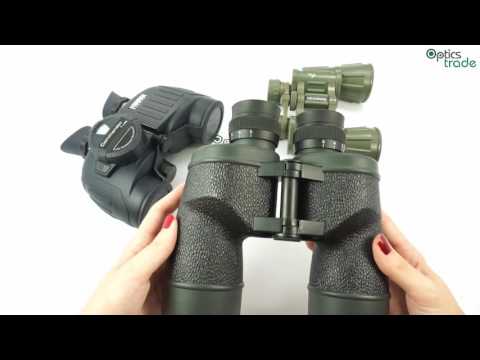
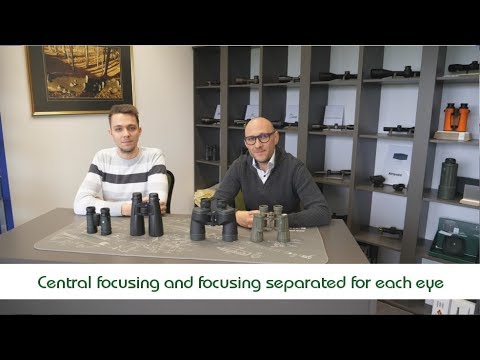
Individual focusing system provides focusing by each eye separately. On the upper side of the both barrels lies focusing rings – diopters, with the numbers for setting a proper focus by moving lenses individually. Majority of binoculars uses the central rotating knob, so this arrangement is not that frequent and most commonly found on Porro prism binoculars. Individually focusing system has many different commercial names like sport auto focus, permanent focus or simply auto focus. The main characteristic of this system is that you can set them only once and afterwards the eyes focus to different distances by themselves. This can be a significant advantage in low-light situations when there is not enough light for precise focusing with central knob. Binoculars of this type are also incredibly watertight and thus very likely to appear on majority of marine binoculars. There are however, some disadvantages of such focusing system compared to more conventional central focusing. Close focusing distance is usually bigger and majority of binoculars with individual focusing does not offer adjustable eyepieces for those wearing eyeglasses.

Features of binoculars with individual focusing

  • (+) focusing by each eye separately
  • (+) less common
  • (+) suitable for marine applications
  • (+) suitable when focusing in low-light conditions
  • (+) incredibly watertight
  • (-) bigger close focusing distance
  • (-) less convenient for glass wearers
Filters
Sort
1 Item
Show
per page
Close
Sort By
In stock
€659.00
Filters
Sort
1 Item
Show
per page
Close
Sort By

VIDEO

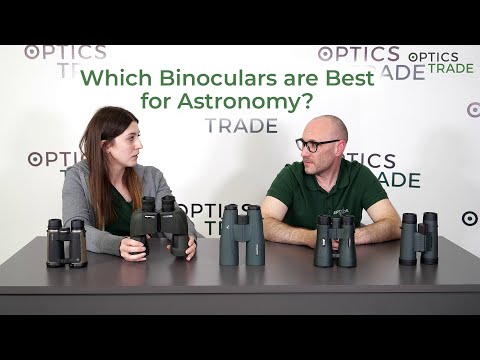
Astronomy binoculars are often said to be the best first telescopes to slowly introduce you to sky gazing and astronomy. With wider field of view than telescopes they allow you to scan the whole sky at once and easily track the observing object. They are more portable, lighter, less bulky and do not require a tripod because lower magnifications bring less shaky images and easier handling. The main advantage of astronomy binoculars is that you are allowed to see with both of the eyes, giving you more natural viewing and easier tracking of the objects - two barrels collect more light. An important factor in astronomy binoculars is the size of the objective lens as they are mostly used in low light situations (at twilight or in pitch dark). The bigger the lens, more light is let through. Increase in light, high quality optics and coatings all contribute to brighter and more detailed image. Astro binoculars may be only water resistant which is enough of a feature to protect your binoculars before dew and moisture occurring at night. Waterproof and fog-proof features just add to the price. Astronomy binoculars may not be a replacement to a telescope, they are simply an addition.

Features of Astro binoculars

  • (+) bigger lens diameters
  • (+) wide field of view
  • (+) portable
  • (+) suitable for low light observations
  • (-) heavier in comparison to other binoculars

A few reasons why the astronomy binoculars are (sometimes) better than the telescope

Astronomy binoculars are suitable for anyone who does not want a large and clumsy telescope. For the telescope, you will spend a lot more time if you want to set it up for the observation. Astronomy binoculars are smaller and have smaller magnification, but for this reason, they are extremely compact and portable. They also have a much larger field of view than the telescope and because of the use of both eyes, observation is much more natural and comfortable. They capture a larger amount of light and, consequently, the image we see is much brighter. It is important that we choose a magnification below 12x if we want to hold the binoculars in our hands and observe; otherwise, they will need to be mounted on a tripod. With astronomy binoculars, you can see a larger number of stars and clearer planets, however, for the details and even more focused observation, choose a telescope.